


Ten Warnings from “Death of the Pastor’s Wife”

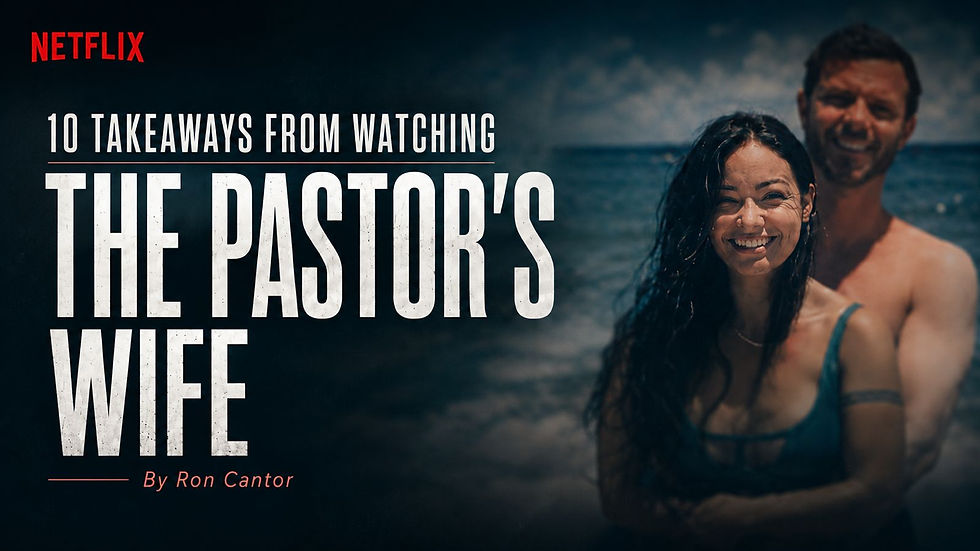
As many of you know, this issue of clergy sexual abuse has taken up quite a bit of my mental energy over the past three years. The Netflix series portrays Mica as “the pastor’s wife.” The fact is, she was a 16-year-old worship leader under the employment of this pastor before she was ever his wife. Before she was his wife, she was his victim. He preyed upon her while he was married to another woman. It is unknown if he actually took her life or drove her to suicide—but this is the traumatic soul damage that takes place when a charismatic pastor preys upon those who trust him. I will probably make a video about this later, but while it was fresh on my mind, I wanted to list 10 takeaways from this documentary.
And may I suggest that the next conversation you have with your pastor or team of elders would include the question, “How are we in this congregation protecting people from clergy sexual abuse?” Ask him if there are any guidelines, such as the ones we put together in The Kingdom Accountability Project (which is free). No system is foolproof, but every layer of protection is a layer of protection.
1. When there’s physical danger, scripture is not to be used as a leash: If a husband is physically abusive or brandishes a firearm, don’t let anyone manipulate you with scripture into believing you must stay in that relationship. Recently, a woman in Israel, who was allegedly encouraged not to leave her husband (i.e., submit), was finally killed by her husband.
2. “Submission” and “covering” language used to silence, not protect: When a leader invokes headship or spiritual authority to shut down a wife’s concerns instead of investigating them, that’s control dressed up as doctrine. Too many women have been told to take back cheating, abusive husbands, some of whom molested their own children, using submission theology. Endangering your own life or that of your children is not submission, but negligence. There is often severe manipulation and guilt that is used. That was clearly seen in this docu-series.
3. Isolation is not a spiritual discipline: When a spouse or a ministry cuts someone off from family, friends, or outside counsel, that’s not “protecting the marriage” — it’s a warning sign. The pastor/husband was given complete and sole authority over the victim’s medication.
4. A polished public image is not evidence of private character: Congregations extend trust based on charisma and platform, which is exactly what a controlling or predatory leader learns to exploit. I have seen the most unaccountable preachers preach articulately and eloquently on the need for accountability.
5. Reporting to authorities is not gossip or slander: Fear tactics that equate disclosure with sin exist to keep victims silent and leaders unaccountable. God has raised up authorities for our protection. It is not betrayal to call the authorities when a husband breaks the law with violence.
6. Serial infidelity and the “one and done” question: This pastor is now on his third wife after devastating betrayals of the first two. This included the pastor paying a homeless man to join them sexually. If churches adopted a “one and done” standard — sexual sin permanently disqualifies a pastor from the pulpit — we’d likely see a dramatic drop in pastoral sexual sin. He did this knowing his congregation would follow him anyway.
7. A generational pattern, not an excuse: His father showed a similar pattern of sexual sin as a minister. I don’t say this lightly, but this man needed deliverance — though in most cases like this, the root isn’t demonic; it’s carnal: a plain lack of self-control. It’s very clear after hearing of his behavior that it was severely demonic, and meant to belittle his wife, taking away her sense of self-worth before God.
8. Sexual entitlement disguised as leadership: This pastor regularly told his congregation that if a wife didn’t meet her husband’s sexual demands, the husband would look elsewhere. That reduces men to animals — it’s not the fruit of a born-again life marked by self-control, and it’s not love. Most of the desert monks were celibate. The idea that if a man of God does not have his sexual needs met at any time at any moment by his wife, that he might cheat on her is stupid. We can control our appetites—whether sexual or in other areas.
9. Sexual sin begins in the mind — guard your thought life: Mica was reportedly forced by her husband into abusive and immoral situations, even involving paying vulnerable people for sexual encounters. Before he ever acted it out, John-Paul Miller would have rehearsed it in his mind. Virtually all sexual sin starts there — if you can control your thought life, you can control your sex life. The more you meditate on immorality, the harder it is to control.
10. No mechanism for removal is itself a danger: The church’s governance model had no provision for removing a senior leader, no matter what he did. That meant he could commit any sin or display any erratic behavior, then simply get up and explain it away — because there were no empowered elders with the authority to remove him. Every pastor should be submitted locally to his elders. That’s biblical. My encouragement is for churches to adopt the one-and-done rule. If a pastor commits adultery, he commits to leaving the pulpit forever.
But I discipline my body and bring it into subjection, lest, when I have preached to others, I myself should become disqualified (1 Cor. 9:27).


Comments